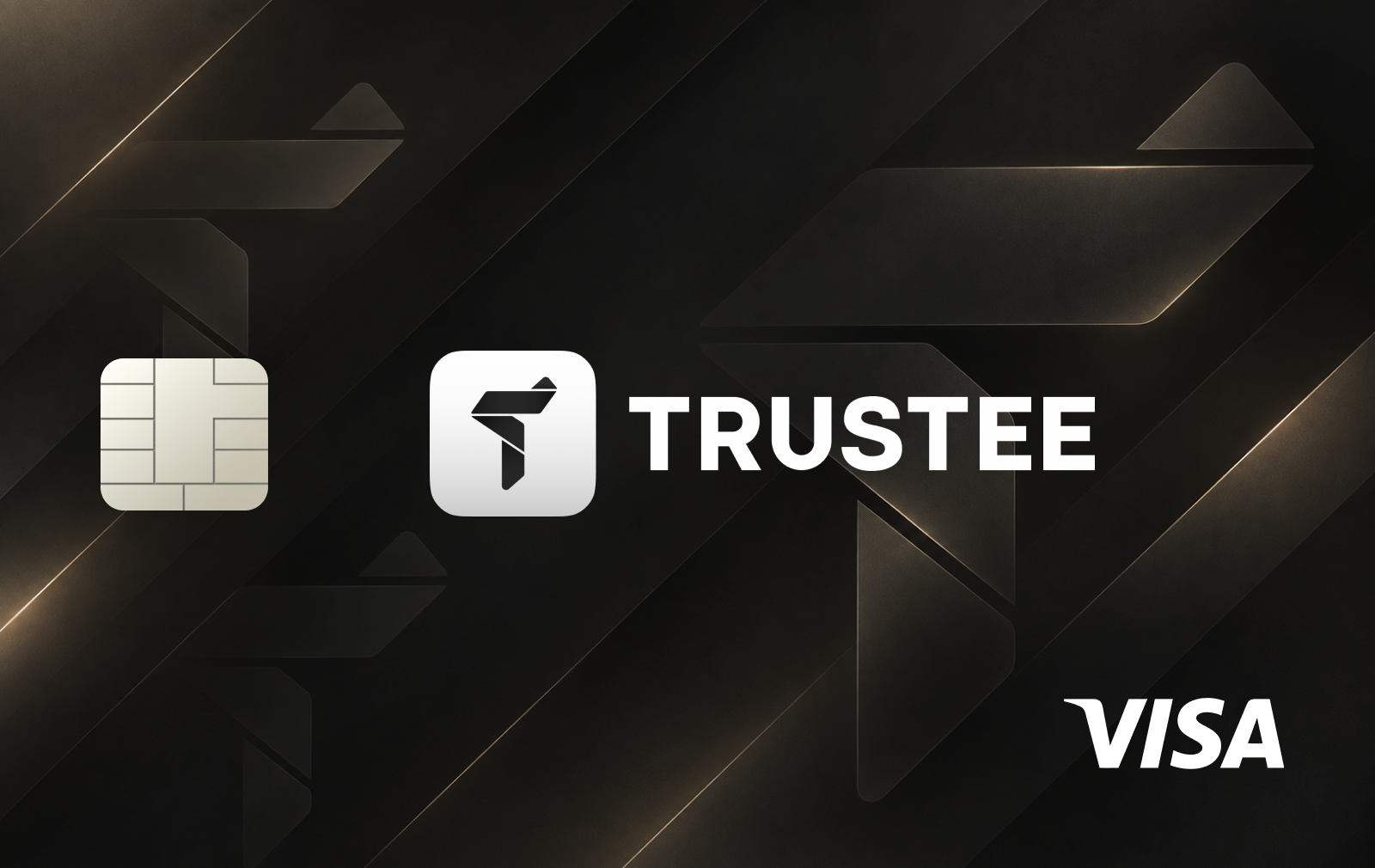
XSPA Card is a prepaid Visa Business card connected to XSPA Wallet. The wallet itself is self-custodial, with private keys stored on the user's device, while the card provides a payment layer for using supported crypto assets online, in stores and at ATMs.
Both virtual and physical cards are available. The virtual card can be added to Apple Pay and Google Pay, while the physical card supports regular Visa payments and cash withdrawals.
Funding and supported assets
XSPA currently lists BTC, ETH, SOL, USDT, USDC, BNB, POL and TRX as supported card-funding assets.
The wider wallet supports Bitcoin, Ethereum, Solana, BNB Chain, Polygon and Tron, allowing users to fund the card across several networks rather than relying on a single stablecoin chain.
XSPA describes the payment flow as crypto-to-fiat conversion at the time of spending. The company advertises a 0% card top-up fee and says it does not add a separate hidden conversion markup, although its whitepaper also notes that card activation, FX and ancillary service fees can apply depending on the product conditions.
Self-custody and card infrastructure
XSPA Wallet is non-custodial. Users hold their own private keys, which XSPA says remain encrypted on the device rather than being transmitted to the company.
The card is linked to this wallet rather than requiring users to maintain their main crypto portfolio on a centralized exchange.
However, XSPA has not published detailed public cardholder terms identifying the final card issuer or explaining the custody and settlement structure of the Visa layer in enough detail to classify the entire card infrastructure as purely non-custodial.
Limits and availability
XSPA advertises card acceptance in more than 200 countries wherever Visa is supported.
ATM withdrawals are currently advertised at up to $1,500 per day.
One verified primary account can receive up to five virtual and five physical cards, which XSPA positions as an option for distributing cards among family members under the same verified account.
Identity verification is required for the card even though the underlying XSPA Wallet can be used on a self-custodial basis without standard wallet KYC.
XSPA does not currently publish a clear permanent list of countries eligible for card issuance, so global Visa acceptance should not be confused with card availability in every country.
Rewards and XSPA token
The XSPA token is integrated into the card ecosystem. The current whitepaper describes card activation, reduced fees and cashback rewards among the token's utilities.
XSPA has not published one fixed cashback percentage that applies to all cardholders, so rewards should be treated as tier- or program-dependent rather than a standard card rate.
How to get the XSPA Card
Download XSPA Wallet and create a self-custodial wallet.
Complete the card identity verification process.
Apply for the XSPA Card through the app.
Choose an available virtual or physical card.
Fund the card using a supported cryptocurrency.
Add the virtual card to Apple Pay or Google Pay if required.










No comments yet
Be the first to share a useful experience with this card.