Best Non-Custodial Crypto Cards of 2026: Top 6


Top 5 crypto cards
A concise selection based on the cards included in this guide.
-
1
 Trustee Plus CardVisaeumobile paynon custodialTrustee Plus Card is a crypto-linked payment card. Compare custody, fees, tiers, limits and regional availability before applying.
-
2
 Metamask CardMastercardeucashbacknon custodialMetaMask Card is a self-custodial crypto debit Mastercard offering direct spending from MetaMask wallets, automatic token conversion, Apple Pay and Google Pay support, and up to 3% cashback in mUSD.
-
3
 Tangem Pay CardVisaAPACcashbacknon custodialTangem Pay Card is a stablecoin-funded Visa integrated with Tangem Wallet, offering virtual and physical cards, USDC and USDT spending, up to 2% USDC cashback, Apple Pay and Google Pay support.
-
4
 Bleap CardMastercardeucashbacknon custodialBleap Card is a non-custodial Mastercard debit card linked directly to the Bleap Wallet, with no card or FX fees and cashback paid in USDC.
-
5
 Etherfi Cash CardVisaeucashbackcrypto backed creditether.fi Cash Card is a self-custodial Visa credit card offering direct stablecoin spending or crypto-backed borrowing, virtual and physical cards, up to 4% cashback in ETHFI, Apple Pay and Google Pay, and ATM withdrawals.
Non-custodial crypto cards let you use cryptocurrency for everyday payments while retaining more control over your assets. However, providers implement this feature in different ways. We have selected six options worth considering in 2026.
How non-custodial crypto cards differ from custodial cards
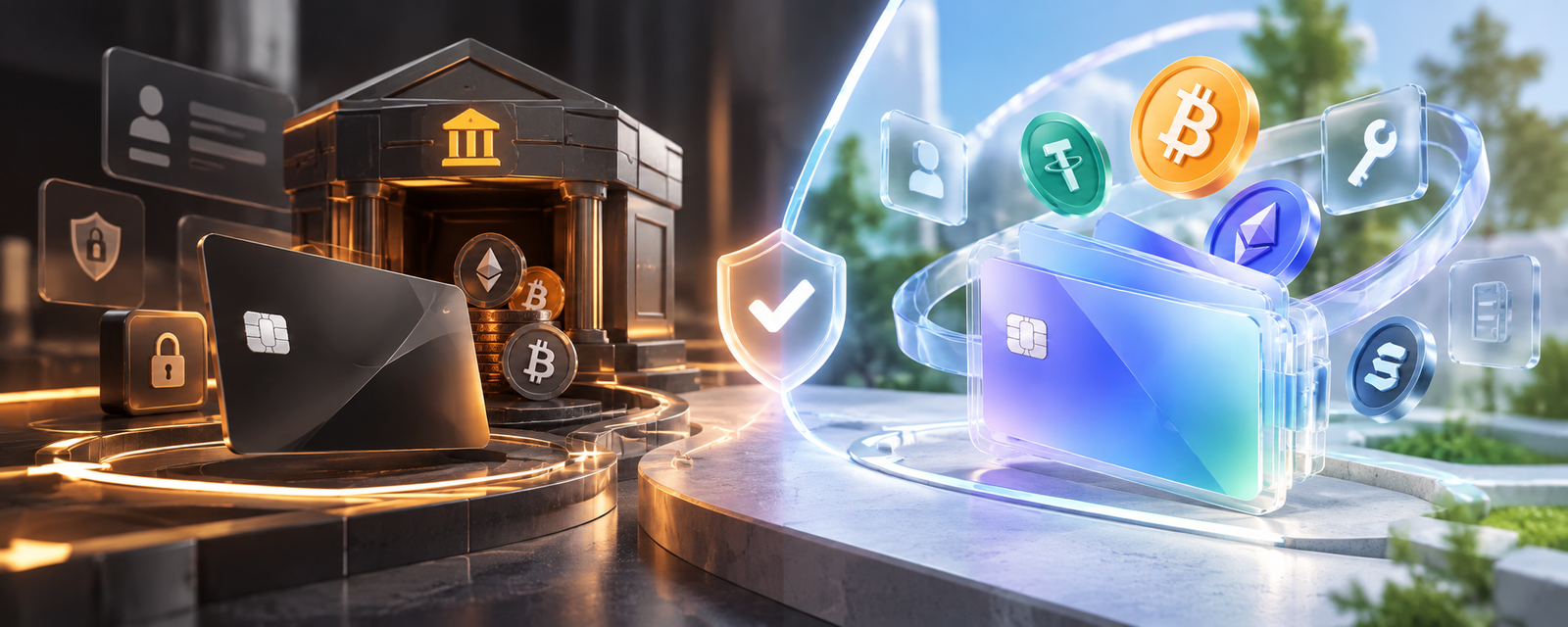
The main difference is who controls the cryptocurrency before it is spent. With custodial services, the operator manages the assets, and users access them through their accounts. In a non-custodial model, the wallet owner retains control of the funds, and transfers require their authorization.
This is especially important for crypto cards. Some products let you pay for purchases directly from a non-custodial wallet, while others use separate smart contract accounts or card balances. Having a non-custodial wallet therefore does not necessarily mean that all funds within the payment infrastructure are held in the same way.
Which cards to consider in 2026
1. Trustee Plus
Trustee Plus combines a non-custodial wallet, crypto exchange services and a payment card in a single mobile app. Users can control their digital assets themselves, receive and send transfers, exchange coins and pay for everyday purchases.
One of Trustee Plus's features is GEMS, a universal asset for paying network fees in the non-custodial wallet. For supported transactions, it removes the need to hold separate reserves of TRX, ETH and other native coins. Network fees still apply, but paying them becomes simpler, especially when using multiple blockchains.
The app offers several ways to secure access: a PIN, Face ID, Touch ID, passkeys and two-factor authentication. Trustee Plus is available on iOS and Android; there is no separate desktop version.
For everyday payments, it offers a virtual Visa card with Apple Pay and Google Pay support. The card can be used for purchases in physical stores and online. It has a separate balance that must be topped up before use. The payment fee is 0%, and the monthly transaction limit is up to 30,000 USDC.
The non-custodial wallet can be used without identity verification, while getting a card requires completing KYC. Card service availability depends on the user's country of residence.
Trustee Plus's main advantage is the combination of self-custody, simplified network fee payments and payment tools in a single app.
2. MetaMask Card
MetaMask Card lets users pay for purchases directly from their non-custodial MetaMask wallet. There is no need to transfer cryptocurrency to a separate card balance in advance: supported tokens are deducted when a payment is processed.
The card uses the Mastercard network and supports several blockchains, including Linea, Base and Solana. Payments can be made using USDC, USDT, mUSD and other available assets. Users manage their own token spending permissions.
The virtual card has no subscription fee, and eligible purchases can earn cashback. However, some transactions may incur network fees, conversion costs or cross-border fees.
MetaMask Card is particularly convenient for those who already use MetaMask and want to pay for purchases without transferring assets to a third-party service. The main limitations are geographic availability and the need to account for the specifics of the supported networks.
3. Tangem Pay
Tangem Pay extends the capabilities of the Tangem hardware wallet, allowing users to pay with cryptocurrency through the Visa payment network.
Unlike MetaMask Card, it uses a separate smart contract account. Users transfer funds to this account for future spending, and the required amount is deducted automatically when they pay. Their main holdings in Tangem Wallet remain separate.
The service supports a virtual card, Apple Pay and Google Pay. The basic plan has no monthly fee. A physical card can also be ordered in supported countries.
Tangem Pay suits those who prefer to keep their main crypto holdings in a hardware wallet while setting aside a separate balance for spending. Identity verification is required to get a card, and availability depends on the region.
4. Bleap Card
Bleap Card combines a non-custodial wallet based on MPC technology with a Mastercard payment card. Users retain control of their assets, while purchase amounts are deducted through an authorized transaction mechanism.
One of Bleap's key advantages is its fee structure. The service says it charges no card issuance or maintenance fees and adds no markup of its own on currency exchange. However, third parties involved in processing payments may charge fees.
Virtual and physical cards are available, along with Apple Pay and Google Pay. There is also a cashback program in USDC, with rates depending on the current terms.
Bleap is an option for users who frequently pay with cryptocurrency and want to minimize associated costs. Its main drawback is regional restrictions on card issuance and servicing.
5. Tria Card
Tria Card is designed for users who work across multiple blockchains and do not want to handle every swap or cross-chain transfer themselves.
The Visa card is integrated with Tria's non-custodial infrastructure. The service says it supports more than a thousand tokens, with the necessary liquidity operations handled through built-in mechanisms.
Users can choose from a virtual card and physical cards in different tiers. Depending on the plan, cashback and additional financial tools are available.
However, multichain transactions are not always free. Swapping assets or transferring funds between networks may incur additional fees. Before applying, users should also check the terms of their chosen plan and the card's availability in their country.
Tria Card is primarily an option for those who actively use several crypto ecosystems and value the ability to manage spending through a single interface.
6. ether.fi Cash
ether.fi Cash combines non-custodial crypto storage, a Visa payment card and decentralized finance tools.
Its main difference from most competitors is the option to choose how to pay. In Direct Pay mode, funds are deducted from the available balance of supported stablecoins. In Borrow Mode, users can pay for purchases by borrowing against their crypto holdings.
This approach allows users to fund spending with cryptocurrency without selling it outright. ether.fi also offers yield-generating tools and a cashback program in ETHFI.
However, borrowing against cryptocurrency carries risks. If the value of the collateral falls significantly, the user's position may be liquidated. Interest may also accrue on borrowed funds.
For this reason, ether.fi Cash is better suited to experienced DeFi users who understand how collateralized loans work.
Which non-custodial crypto card to choose
Trustee Plus offers a combination of a non-custodial wallet, GEMS and a payment card in a single mobile app. MetaMask Card stands out for payments directly from the wallet, while Tangem Pay lets users separate everyday spending from their main holdings.
Bleap focuses on payment terms, Tria on using assets across different blockchains, and ether.fi Cash on DeFi capabilities.
When comparing options, it is important to consider not just fees and cashback but also how funds are held. A non-custodial wallet does not always mean that the balance of its linked payment card follows the same custody model.
How we selected crypto cards for this ranking
When compiling this ranking, we considered the crypto custody model, users' ability to manage their own assets, fees, supported payment networks and ease of everyday use.
We paid particular attention to how each crypto card interacts with the wallet: whether it deducts funds directly at the time of payment, uses a smart contract or requires a separate balance to be topped up in advance.
We also considered card availability in different countries, verification requirements and additional features. The ranking positions reflect the products' overall features, rather than the results of independent testing of each card.